Discover a marvellous trip back to Lancaster of the past by author Bill Jervis, which we plan to release in weekly segments. Although the story is set in Lancaster the family and most of the characters within are entirely fictitious -- but this story does chart a way of life largely lost and which many Lancastrians may recall with equal horror and affection...
Showing posts with label Independent Labour Party. Show all posts

Monday, 15 October 2012

Chapter 45: Gordon meets Lesley

Gordon saw his family off to Barrow on a Friday evening train. Then he hurried to the meeting at Jack's. He was ten minutes early. Sheila answered the door and he apologised for being too soon.

"That's all right! You're not the first. Beth's already here. Go straight up! I expect Jack will be with you in a minute."

Gordon felt his heart beating strongly as he ascended the stairs. There was a rush of blood to his head. He went into the study. There were two bottles of wine on Jack's desk. Beth was looking at the titles on Jack's bookshelves.

She was wearing slacks. Gordon hated slacks. Apart from that, he liked what else he saw. The luxurious red hair came half way down her back. She was about the same height as himself. Her waist was slim. She turned and greeted him. He noticed her breasts were quite large and shapely. She was wearing a tight woollen jumper.

They were at ease with each other. They chatted about what had happened at their workplaces during the week.

Gordon told her how they had recently managed to gain recognition for a union and how difficult it was to involve his work-mates in union activities.

"They only show any interest when we have a pay claim in. This week I've had nothing but moans. Not much in the way of thanks for our negotiated pay rise.

"It's not as though I'm paid for doing my best for them," he continued. Being a shop steward is a thankless task. The bosses think you're trying to ruin the firm and the workers think you're not doing enough for them."

Beth rubbed a thumb and forefinger together and said, "Money! Money! Money!" She smiled sympathetically.

Gordon noticed that she wore no wedding or engagement ring. "Do you live with your parents?" he asked.

"Oh no, I left home for good as soon as I started work at Skerton. It's best to be independent don't you think? I share with my friend Leslie."

Gordon wondered whether Lesley was a man or a woman. "He's not with you here. Isn't he interested in politics?"

She laughed, "Lesley isn't a 'he'. She's another teacher at Skerton. We started on the same day there. We were friends at school and went to the same Training College. She was born and brought up in Halton too. But to answer your question about politics, no, we have similar views but Lesley always says she has better things to do with her time than mess about with politics."

"No boy friend!" Gordon thought. "So far, so good!"

During the week, he'd made up his mind that he wanted to see Beth on her own. He'd established that there was no boy friend around. And he'd got Margaret out of the way. The way was wide open for him. But he had only one free day when he would be able to see her. What could he suggest? He had until the end of the meeting to think of something.

Inadvertently, Jack solved the problem.

As usual, he took charge. He'd decided that the week's discussion should be about favourite books. This meant, for once, that each member had a chance to have a good say although Jack followed their words about their favourites with his own lengthy comments.

Just before the break for wine and for informal chatting Jack made an announcement.

"Tomorrow the local anti-Mosleyites are doing a leaflet drop. The ILP want to counteract what his lot did last weekend. They hope that we'll be able to help them."

Two at the meeting had other arrangements and couldn't help. Jack and the male colleague of his from Skerton School would be available all day. They agreed to work together around Owen Road. Beth and Gordon would both be free in the afternoon. It was Jack who suggested, "So perhaps Beth and Gordon could do around Halton Road for us?"

Gordon could hardly believe his luck. While they were sipping their wine, he arranged to meet her at half-past two, at the end of Halton Road, in Skerton. She took half of the leaflets and he carried the rest home.

"Next part of mission accomplished!" he gloated to himself.

Crossing the field on the way to Sefton Drive there was still a faint glow of red in the sky. It should mean a fine sunny day ahead. The family should be safely at Barrow by now.

"Red sky at night, shepherd's delight! More like Gordon's delight!" he hoped. He gave the cats a few scraps for their supper and went off to bed. Jesse decided he'd have to make do with second-best, Gwyn being away, and came upstairs after him. He curled up on Gordon's chest purring. Gordon went to sleep full of anticipation.

He went to work on Saturday morning as usual. The weather was so sunny that he didn't bother taking his waterproofs with him and he did not wear his cap. Before he went, he remembered to he had to feed the cats.

Coming back from work, he walked even more swiftly than usual. Margaret had left him a meat and potato pie to warm-up for his meal. It was easily cooked on the new gas stove. He had time to spare so he relaxed with a cup of tea, then he had a refreshing shave.

He whistled to himself, standing half-naked in the bathroom. When he'd finished, he had a good look at his reflection in the bathroom mirror. "Not too bad for thirty-four!" he mused, frowning at the few wrinkles round his eyes and the greying at the temples. He tried to forget the bald patch which he knew was spreading on the back of his head. He stepped back and viewed his torso. That was okay. The time had not yet arrived when he'd have to make an effort and tense his muscles to make his stomach appear flat. His friend, Brian, already had a prominent belly. He bent his arms and admired his biceps.

"Gordon," he said out loud, "I think you'll do lad. You're not past it yet!"

Shirt on, collar attached, cufflinks fixed, hair slicked down, shoes well-polished, he viewed the weather. It was still a nice day so no need for a raincoat. "Off I go!"

He went the long way round by road. He did not want to take the shine off his shoes by going over the grass. "Oh what a beautiful afternoon it is!"

He passed Jack's house and carried on along Torrisholme Road. There were a few people out and about. He called a friendly greeting to those he recognised.

"Nice day, Gordon!"
"Certainly is! Couldn't be better."

Ryelands Park was next on his right, after he passed under the railway-bridge at the end of Khyber Pass. It was the site of the old estate of James Williamson and who'd built the Structure in Williamson Park, better known as the Ashton Memorial, and the new Town Hall in Dalton Square.
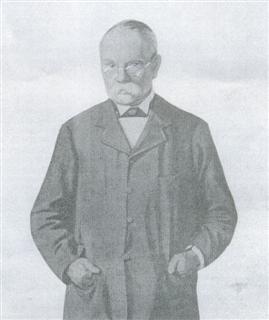
Lord Ashton
Little Jimmy Williamson, as he was known to locals, had lived in Ryelands House within the Park. He had a high wall built around it so none of his workers could see what he got up to.

He had a cycle track there and raced round it to keep himself fit, riding racing bikes specially made for him. The few witnesses of his antics said he was an adept trick cyclist, although one sardonic Skertonite had quipped: "Aye, he could always earn his living performing on his bike if he lost all his millions!

"He's always been a tricky bugger! Too tricky for us!"

The same man who had been given the sack 'for slackness at work' was one of many who declined the invitation to go to a party in the Park when Jimmy who'd become Lord Ashton, and provided ten thousand five-hundred splendid lunches for locals.

"For all of my friends and neighbours," he said.

Another time, when he opened his new Town Hall, all of the Lancaster school kids had to go to the official celebrations. They were given a box of chocolates and a commemoration medallion.

Many of the rebellious Skerton parents instructed the children to show their contempt for the presents and they threw them over the high wall of Ryelands Park on their way home from the event. Not naturally violent and normally quite subservient, the disgruntled employees had their ways of irritating their egotistical, domineering boss.

Williamson considered the persistent attempts of the ILP to unionise his workers outrageous. He made every effort to stop them, using his carefully contrived works' spy-system, to find whom he considered to be trouble-makers and to sack them.

In 1911, when it required the casting-vote of the Returning Officer to gain the election of his favoured candidate in a Skerton by-election, it nearly gave him a heart attack. He decided that he had had enough of his 'friends and neighbours', and spent most of the rest of his life miles away, near Blackpool. Creeps tried to organise demonstrations of loyalty for Jimmy but his pride was affronted. He could not be swayed. His mind was made up. He went away and stayed away from his town — but he still ruled every aspect of their working lives from afar.

When he came home to Ryelands to die more than twenty years later, he was still full of bitterness and anger against what he considered to be the disloyalty and ingratitude of the citizens he had patronised for so long.

Gordon knew all of these stories backwards. He pondered them as he walked past the Park, which was now public property. He thought it was ridiculous that one man should have had all that wealth and so much influence over thousands of lives. Although his long stride was taking him quickly to his assignment, it still took Gordon over ten minutes to walk the full length of the Park. And that had been only one of Little Jimmy's several living places.

Gordon crossed Owen Road and went down Aldren's Lane, the bundle of leaflets under his arm. There she was, waiting for him on the corner.

Jack had given her a list. They were to do some of the side streets as well as all of Halton Road. The River Lune was still tidal as far as Halton was over on the right.

"You walked here from home?" he queried.
"Yes," she replied, "it would be too awkward pushing my bike around with me while we work."

Gordon said, "I haven't got a bike. I love walking. Really enjoyed it this morning going to and from work. Lovely weather. The Park looked nice just now. A few leaves starting to turn brown and orange. Otherwise you might think it was still summer."

They planned their afternoon. The best way would be leap-frog leafleting. Each would post at every other house.

"And remember what Jack said, we're just leafleting. Not looking for arguments. If you become involved with a wrong-one you could be in real trouble. They come on heavy, these Blackshirts."

She nodded agreement. "I remember. I'll do what he said."
"Shall we have a cigarette before we start?" she asked.
"You carry on. I don't bother with them these days."

She lit up. Not many women smoked in the street! Obviously, she didn't care what any parents of her children might think. A lot of the houses they were visiting had kids from her school in them.

"I like your dress. It goes well with your hair," he told her, as they stood there. It was made of light cotton, a brightly-coloured summer frock, with quite a low neck.

"Thank-you! I'm fond of it. Lesley bought it for me for my birthday. She has good taste. Knows what suits me. Glad I'm wearing it. Need something cool on today."

As she smoked, he continued to appraise her appearance. He beagan making comparisons with Margaret. Margaret did not wear low-necked dresses. His wife did not have large breasts. On the other hand, Margaret would never be seen smoking in the street, puffing away on a Black Cat cigarette. Margaret would never dream of wearing slacks.

"Why am I making these comparisons?" he wondered. "It's not as though I'm going to have to make a choice."

She looked back at him, meeting his gaze evenly. She knew that he was making an effort to compliment her. Local men were not renowned for smooth talking.

"Living together, you and Lesley must be really good friends?"

"You could say that. She's a very tolerant person. Very easy-going," Beth replied. "Right," she pronounced, flicking her cigarette end into the gutter, "I suppose we'd better make a start. I'll do the first house."

They worked steadily. When they went down the side roads, they did the left-hand-side first and came back to Halton Road, via the houses on the right. After an hour, Gordon suggested a rest.

"Good," agreed Beth. " I'm sweltered. Let's go and sit by the river. We'll have a breeze there to cool us down a bit."

They crossed the road and sat on a bench overlooking the Lune. There were municipal gardens around them. Beth lit up again. Gordon let his outstretched arm rest on the back of the seat, nearly touching Beth's shoulders.

She asked him about his family. He told her about Michael's good progress at school, about his nightmares and moodiness. He spoke lovingly about Gwyn's easy-going nature and his concern for her health. He described how he loved playing with his kids. He didn't say much about Margaret.

She leaned forward, dropped her cigarette end to the ground and stood on it. Then she leaned closer towards him and he let his arm drop across her shoulders. She did not pull away. In fact she snuggled closer to him.

He'd had one or two glances around. They were shielded from the road and there was no-one about near their bench. It came as a shock when three angry-looking blokes seemed to materialise from nowhere. They came and stood right close in front of them where they sat. Their body language was threatening.

Gordon moved his arm from around Beth and tried to stand up. A hand shot out and pushed him back to his seat. A finger was poked in his face.

"Just you sit there matey," said a man wearing a suit and tie, the one who was standing back a bit from the other two rough- looking louts, "we've something to say to you!"

Gordon began to protest, "What do you think you're playing at?"

'Suity' spoke again, "Shut your gob, smart arse! I'm doing the talking." With that, he snatched the bundle of leaflets away from Beth and one of the tough-looking assailants grabbed Gordon's.

Gordon protested again, "What the hell's going on?"

This earned him a practised kick right across his shins, which really hurt. He grunted with pain.

"You deaf or something, smart arse?" 'Suity' went on. "I told you to be quiet."

Gordon bent forward to rub where he had been kicked and a fist hit him under the chin making him sit bolt upright again.

It was then that Beth started her tirade against the three, "I know what you are! You lousy Fascist shits! Why don't you piss off where you came from! Get back down the sewer you belong in!"

One of them grabbed her by her hair and told her, "Shut up, big tits -- or I'll smash your face in."

He'd dragged her to her feet but before he could push her back onto the bench she brought up a knee and thudded it into his balls. Letting out a shriek at the unexpected retaliation he let go of her hair and held his crotch with both hands. She was off running for help.

"Don't worry Gordon. I'll be back in a minute with the lads!"

The 'lads' were an invention. But the thugs did not know.

"Shit," said 'suity', "time we scarppered!"

Gordon received another kick on the shins and the trio went off, mouthing threats and their usual abuse.

"Jew lovers!"
"Commie bastards!"
"Traitorous shit-bags!" And so on.

After a couple of minutes, Beth reappeared. Gordon could hardly stand. His legs were still hurting him badly. He grimaced with pain.

"Where did that lot come from? I wasn't expecting it, were you?"
"Well, I know from what I've heard at school, there are one or two Fascist families in Skerton. But those had London accents."
"Perhaps they stayed over from last week They had a gathering here to help their local lot get more organised. One of their big names, Haslam, visited. I think we were just unlucky that they spotted us. What are we going to do about it?"

Gordon hesitated. The last thing he wanted was publicity and his wife knowing how he'd spent his Saturday afternoon. He decided, "Best let it go! We haven't any witnesses. Also, I'm not sure if our leafleting is legal."

"Only Jack could tell us that. If you say so, we'll just put it down to experience. We'd better be more careful in future. But I don't like to think of them having their own way. Can you walk yet?"

"I think so. I'll be all right in a minute. I've had worse, playing soccer."

"Well that's the end of our leafleting," Beth replied. "They've blown away all over the shop. We could go on to my place and sit in the garden. It's nice there. You could meet Leslie. We could have some wine and I'll make us something to eat."

Gordon suddenly felt much better.

Sounds like a good idea to me! Let's go!"

It was about a mile to the outskirts to Halton village. They went past the Greyhound Hotel and along Low Road until they came to narrow Mill Lane. They walked quite a way then followed a footpath, coming to a woodland clearing near the river. A train had just left Halton Station. They had glimpses between the trees of the smoke and steam from it. It was going slowly but picking up speed. It was going up the line towards Wennington on the other side of the river.

"What a lovely spot!" exclaimed Gordon. "It's perfect!"

"But," he thought, "that's not much of a place to live in." He was looking across the clearing. He'd rather have been back in Edward Street than have to live in the building, if you could call it a building!

Beth smiled at him and said, "We like it. We love it here. Come and meet Leslie."

They walked across the sunlit clearing. On closer inspection, Gordon could see that two railway goods wagons had been joined together. The large letters L.M.S. had been partially painted over. Trellising was nailed to the wooden side-wall and had a variety of plants flourishing on it. There were climbing roses, passion flowers, clematis, honeysuckle and winter flowering jasmine. The clematis was growing in wild profusion over the roof and and starting to curl around the metal chimney which protruded from the roof of the construction.

The dwelling rested on railway sleepers. There were three steps up to the doorway. "We need to be well off the ground in case the river floods," explained Beth.

"Lesley!" she called, "I've brought Gordon, Jack's friend to meet you."

Another woman, the same age as Beth, appeared in the doorway. She was another beauty: raven-haired and plump, with a Titian-like figure. This was quite obvious because she was bare-breasted. Without any hint of embarrassment, she came down the steps and offered Gordon her hand to shake.

She spoke softly in a husky voice."Hello Gordon! I'm pleased to meet you. Beth's been telling me all about you. I'm so glad you've been able to come. What would you like to drink? There's beer or red wine whichever you prefer."

"I'm pleased to meet you too," responded Gordon focusing on her face and trying not to look at her chest.

"A beer would do fine! It's been thirsty work."
"Yes," said Lesley, "it's the weather. Lovely isn't it? Maybe the last chance for sun-bathing this year. I've been sitting out in it until a couple of minutes ago. There's seating round the back. I'll bring your drinks to you. Wine for you dear?"

"Thanks, love!" replied Beth. "Come along Gordon. I think you're in need of a rest." Gordon was sweating profusely. It wasn't just the heat or the long walk!

There was a swing seat with three floral cushions. Beth and Gordon sat down. There was plenty of room for three. Leslie sat with them after she'd brought their drinks. Gordon sat in the middle. Either side of him were two gorgeous females. Leslie was still half-naked. "Free-thinking has some unexpected benefits!" he thought, sipping his beer.

"Well," he said, "Here's to it! Cheers girls! And thank-you!"

He was a long way from Sefton Drive. This was another world. Beth spent a long time telling Lesley the story of their leafleting and how it had ended.

"Good job they didn't really try it on with you darling," murmured Lesley, "or they might have received the full benefit of your black belt qualification!"

"Do you mean it? Has she really?" asked an astounded Gordon.
"Oh yes, our Beth has many hidden talents, haven't you dear?"

She turned towards Gordon. "And what about you Gordon? What are your secret talents?"
"I'm pretty good at making a fool of myself," he grinned.

Both girls laughed.

"I told you he wasn't a big-head," said Beth.
"Well, Gordon, that's one thing in your favour. We've known a few of those haven't we Beth?"
"More than a few," agreed Beth, passing her cigarettes over to Leslie and lighting one for her. Lesley had to lean sideways and Gordon felt her breasts brushing against him.
"You two stay here and I'll go and make some sandwiches," offered Beth. "Okay?"
"That would be lovely darling. You would like something to eat Gordon?"
"Yes, please," replied Gordon, "I am a bit peckish."

Beth went inside the house and Lesley took Gordon by the hand. "Come!" she said, "I've heard that you are a gardener. I'll show you what we've achieved."

She bent down to pluck a late-flowering blue-and-yellow pansy. But it wasn't the flower he was admiring. "Another Joyce!" he thought. "No knickers! What the hell am I getting myself into here?"

She stood upright and turned to Gordon and offered him the flower. "Here," she smiled, "kind sir. Put it in my hair for me!" Gordon took the flower and pushed it gently into her black hair. Her beauty was enhanced by it.

The women had worked hard and subdued the woodland undergrowth for a couple of yards either side of a path which led towards the river. The borders were filled with chrysanthemums, one of his favourites. They had other end-of -- summer blossoms: fuchias, geraniums and dahlias.

Lesley enthused about the garden and the joys brought by different seasons. " I think September is a lovely month," she declared, looking around the garden. "Still so many flowers and so much colour. I like April and its brightness, but I prefer the melancholy of September. Nature trying to keep her summer clothes on and not quite succeeding."

"A bit like you," Gordon thought.

She showed him the river. There was not much fresh coming down the valley. To the right, across the river, he glimpsed the roof of Halton's charming railway station. He could also see part of a footbridge. She pointed in the other direction to more woods.

"We call those the Bluebell Woods. There's just one solid carpet of blue there in late spring. And shush! Listen, you can hear the water falling over the weir by Helme's old mill, the one Williamson's own now."

Gordon felt like he'd known her for years. Everything was so natural between them, just like it had been with Beth, right from the first words exchanged.

There was a shout from back where they'd come from."I'm ready for you," Beth called. Gordon and Leslie left the riverside and went back. Quite a spread was laid out on a portable table placed in front of the garden seat. "I've secured it so that the seat won't swing while we're eating," said Beth. Lesley sat down and Beth handed her a plate.

"Do you think I could use your toilet?" asked Gordon. He always called it the 'lav' at home; 'toilet' seemed more appropriate in his present company. He'd seen 'TOILET' on the bosses' rooms at work.

Leslie waved towards the woods."Help yourself! It won't cost you a penny!"

Gordon went behind a tree out of their sight. "It's like being with a couple of mates," he thought. "I can say and do anything without causing offence."

He was good with new company after his initial shyness. He needed people to make him feel at ease. It had been the same when he first met Jack. No academic himself, he was wary of educated men, and women. But once Jack had shown friendship, that was forgotten. Gordon had felt his equal. These two women were the same. There were none of those stupid man and woman barriers between them. He felt that they were both already his friends. It was obvious that they liked him.

He went back and asked, "Where do I wash my hands?"
"The river of course!" Beth said.

Off he went again. A few clouds were gathering over the Lune and the sun went in suddenly. There were a few splashes of raindrops on the water. When he returned to the women, they were gathering up the food and plates and heading for their cabin.

"Bring the table!" Lesley requested. "We'll have to eat inside."

Gordon was surprised by how much room there was inside.

There was one big room. The only light was from the full-length panel of glass set in the door. It was a bed-sitting room with a couple of easy chairs, a settee, rugs and a bookcase. He put the small table down in the middle of the room. In one corner, was an octopus stove and a chimney going up through the roof. A lot of the space to the right was taken up by a large double-bed.

"A large double-bed? Just the one bed?"

Lesley pulled on a brown, woollen jumper and sat in one of the easy chairs. Beth invited him to occupy the other and she sat on the floor after the food had been redistributed. There was no more beer but there was plenty of wine.

Conversation flowed. The topics included favourite books, politics, work, family, the attack by the Fascists that afternoon. Gordon showed them his bruised shins. Humorous anecdotes, jokes and witticisms lightened their chat. Gordon began to feel the effects of the wine and relaxed even more.

It was raining heavily outside. His cats would be hungry. Ought he to go? It wouldn't be the first time he'd had a soaking. Memories of the Joyce debacle flooded into his memory. He decided to tell them about what had happened that night, when he and Joyce were stranded on Snatchems. They thought it was hilarious. Then he told them that he'd better be going.

Both protested. No! He must stay the night. There was no-one at home waiting for him was there? There was no point in getting wet through. It would probably be fine in the morning.
"But I have the cats to feed!"

"I think they're quite capable of looking out for themselves for one night don't you Beth?" laughed Lesley.
"Definitely," giggled Beth. The other two giggled with her.

There was no electricity and it was becoming quite dark. Beth lit two paraffin lamps. It felt really cosy in their dim light. It was still warm so they didn't bother lighting the octopus stove.

"You must be cold here in the winter."
"We don't live here in the winter! We only come here when the weather's good. This is our summer den. We have a house on the top road."
"Oh!" said Gordon.
"You didn't really think we stayed here all the time? We like our home comforts, don't we Beth?"

"We certainly do!" agreed Beth, as she topped up the glasses, once more. The rain was pattering away on the roof of the cabin. There was no wind. It was a pleasant sound, suiting their mood, enhancing the feeling of security and of sheltered well-being. He felt safe , safe from the rain and safe from all of the outside world. He was on a real high. He felt great. His mood expanded. He was good company. He proposed a toast, "Here's to us! Bottoms up!"
"Bottoms up!" both of the girls shouted in response.

Lesley pulled a wind-up gramophone from under the bed and a pile of 78's. Beth moved the furniture back and there was just enough room for them to dance together. They had all the latest Jack Hylton and Roy Fox records. When a record began to slow down nobody wound the machine up. It was hilarious all swaying together, more and more slowly, arms around each other as the music slurred and finally ended. They collapsed in a heap on the floor.

Inhibitions were banished. Hysterical laughter, dizziness, ticklings and squirmings followed.

"More wine! I want more wine," stuttered Beth. Another bottle was shared between them. They were all tipsy and it seemed quite normal when Leslie ordered, "Time for bed! It's late!" She'd obviously had enough of stupid frolicking on the ground. She turned the lamps out and groped her way to the bed, undressed in the dark, pulled back the bedclothes and climbed in.

It was a farcical situation. Gordon felt that he was in the dark in more ways than one! He wasn't sure what to do. Should he stay with Beth on the floor? Would Beth be joining Leslie in bed? Where was he supposed to sleep?

"Come on you two!" commanded Lesley. "I'm cold. I need warming up!"

Gordon slept between the pair of them. He left it to them what they wanted to do and what they wanted him to do. They expected quite a lot and he was able to oblige! As his son Michael might have said, "It was a really big adventure!"

The only unease he felt was next morning when he went for a pee in the woods. It was just before he left for home. He could hear their loud laughter coming from the cabin. Almost uncontrolled hilarious laughter! Were they mocking him? Had he been used by them? Had they planned it? How often had they done it? How many had been there before him? He went back inside, to say goodbye to them. They both sat there together, their eyes sparkling, their hands over their mouths, trying to stifle their mirth. He wondered what the joke was. Something told him that perhaps it was he. Perhaps he was the joke!

Web Links

Lord Ashton - The Lino KingProfile on the Lancaster City Council web site

Disused Railway Stations: Halton

Friday, 12 October 2012

Chapter 44: The Matthews at Ryelands

Spain had hardened Jack Matthews. He was distant and short-tempered with Sheila, treating her like a recalcitrant pupil. He was always irritable and impatient with her and could be really nasty if she broke any of his petty rules.

She tried to make allowances for him. She knew that he was having a lot of pain. She knew that his experience in Spain had dismayed and disillusioned him. He was haunted by some of the atrocities that he had witnessed. The cruelty and depravity of the opposing sides had been appalling. The betrayals and indifference to suffering of different factions within the Republican ranks had dented his idealism. He hated some manifestations of his blessed Socialism. He viewed humanity with a jaundiced eye.

In her lowest moments, Sheila wished she was back in Durham. It was as bad as that! Jack was so unbelievably mean and unhappy. He was the cause of her feeling miserable, too, when she should have been full of the joy of life, because she loved her new baby.

Her first husband might have been a lot older than her, and deadly dull but at least he was easy-going. Jack never had a good word for her anymore. She knew that the pain from amputation could be agonising but his behaviour towards her and the children was inexcusable. He had sleepless nights when he dreamed of some of the terrible things he'd seen in Barcelona. She felt sorry for him. She tried to console him but he rejected all of her attempts to sympathise with him.

"What do you know about it?" he'd snarl dismisssively.

And he wasn't pleased about the new baby! "There's a war coming. It's the wrong time to be having babies."
"It takes two you know," she responded.
"What does?"
"To make a baby!"

He ignored what she said and went upstairs to his study and his books.


Jack had managed to rent one of the few four-bedroom houses on the Ryelands Estate, at a rent of six shillings and seven pence a week. It was a lot less than the big house they had had up Wyresdale Road.

He still used his surplus money to help charities. He sent most of it to civilian victims of the Civil War in Spain. He said, "Socialists should put their money where their mouths are! One good law is worth a thousand acts of charity. Until we have good laws, let's be charitable!"

Gordon was delighted that he'd returned. The evening after the Matthews moved to Ryelands, he went round to see if he could lend a hand. He thought he might shift furniture that Jack might not be able to manage.

He was welcomed with a hand-shake and friendly words.

Sheila could not help noticing how the old Jack charm could be turned on like a tap when it suited him. He thanked Gordon profusely for his offer of help. But no, there was nothing he could do to assist them. They'd had other paid help after the removal men had gone. All of the heavy items were in position. The rest they would take their time arranging and could manage themselves.

"Thanks for coming round," Jack told Gordon. "I'm delighted to see you again. I'd been wondering how soon we'd be meeting. Shall we go upstairs for a chat? I've a lot to tell you. Perhaps you could carry some of those books for me?"

Gordon lifted about a dozen volumes from a pile on the floor and followed Jack up to his study.

"See you later!" Gordon said to Sheila.
"Knowing you two, it'll probably be a lot later! Shout down when you've put the world to rights and I'll bring you a cup of tea." She hoped Gordon's visit would put Jack in a good mood. That would make a pleasant change!

During Jack's absence, Gordon had seen members of the old discussion group only very occasionally. Jack had plans for fresh meetings. He'd converted the bedroom to a study and most of his books were already up on shelves. He'd arranged them in sections and in alphabetical order.

"We could meet up here," he suggested. "It's comfortable enough. Plenty of room for about half a dozen of us. We could find new people. There are bound to be a few round here who'd be interested.

"You could ask at your union meeting if they know of anybody. I'm keen. How about you?"
Gordon didn't reply straight away. Now that he had his own place, Gordon was finding plenty to occupy his spare time and his interest in politics had waned -- although his belief in Socialism had not changed. He was painting and decorating the house and enjoying his gardening. The kids stayed up later now than when they were babies and he loved being with them. It was relaxing on a fine evening to take a couple of chairs outside. He liked sitting with Margaret soaking up the evening sunshine. He was content to be surrounded by nature and watching the children play until their bedtime. But, he had to admit to himself, perhaps he was in a bit of a rut. Apart from his fortnightly union meeting, it was all work, home-life and nothing else. He never met anybody new. He might enjoy stimulating company now and again.

He envied Jack, he realised. He had so much energy. He was so gregarious. He talked enthusiastically about all of the marvellous people he had met on his travels. He passed over the hardships and the downside of his experience. Jack knew so much more than he did. Yet he still had an unquenchable thirst for more knowledge. He had an urge to explore people's minds. He looked for chances to express his opinions and ideas. He was skilled at holding forth, playing the expert. He loved being the man in the know.

It wasn't just personal experience like finding out what it was really like in Spain. Authors excited him and he longed to share his excitement about novels and non-fiction books he'd read.

Gordon had learned from Jack that books could inform, entertain and stimulate. They could activate the brain and make one feel really alive. They were a marvellous way of sharing. Authors you'd never met could be admired and re-read. Once you'd read one and enjoyed it you could seek out other books they'd written. You could debate with favourite writers, in your mind, without stirring from your arm chair. You could pit your wits against theirs. You could shout out with glee when a passage really moved you emotionally. Reading an author's latest book was like an exciting encounter with an old and trusted friend.

In the past, Gordon had looked forward to hearing what Jack's new recommendations were and to borrowing some more of his volumes. It would be good renewing the family friendship.

But, he decided, he would prefer not to have a set arrangement and having to go to a meeting every week, so he expressed enthusiasm for Jack's idea but voiced reservations. "How about waiting until the autumn?" he replied. "That'll give us time to find the right people. You'll have settled in at Skerton. The evenings will be drawing in and my garden won't be taking up so much of my time."

Jack thought about the poor sods of the Independent Labour Party out in Spain. They hadn't had much time to worry about their gardens. His plan was to start with a discussion group. After a while they might become an active, local influence. He wanted his new group to be ready to further the cause of the ILP in elections. Action needed to be taken to oppose Oswald Mosley's Fascists, who were having an increasing influence in the area. However, the propagandist in him was subdued by the pragmatist. He could see that Gordon did not want to be pushed.

"Okay then, we'll make a start at the end of September." Perhaps Gordon was right. It would give him time to find exactly the right sort of person. There were too many armchair Socialists. He was after involving workers, not just talkers.

Gordon stayed a while and Jack told him more about his Spanish adventure. Then they went downstairs so Gordon could have a look at the new baby. Jack told Gordon how keen Rob was on seeing Michael again. Sheila agreed to take Rob and Rosa across the field to the Watsons the following afternoon.

She couldn't help noticing the old Jack who had manifested himself as a result of Gordon's visit. She said to herself, "He's a two-faced sod!"

Gordon sipped his tea and ate a slice of a cake Sheila had baked before leaving, saying good bye to his old friend on the door step.

At home, Gordon found he had time for some more gardening before it was too dark. He worked until the sun went down, enjoying the quiet evening and the changing hues in the sky.

The clouds of midges were a snag however. There was a damp place, near the bottom of his garden, where they loved to dance agitatedly. Despite their bites, which itched and were painful if you scratched them, Gordon liked watching their apparently haphazard gyrations. He was becoming quite a contemplative. There was something deep within him which responded to being so close to nature on the edge of his home town's suburbia.

Once Gordon left, Jack left Sheila downstairs, all on her own again, sorting the children for bed. He went back to his books.

The summer passed happily. Michael and Rob met frequently during the long August holiday. The two women resumed the old arrangement of one looking after the children while the other one was freed to go shopping in Lancaster.

The boys were allowed to go exploring the woods and the surrounding area on their own. The field was the main attraction on sunny days. Gwyn and Rosa went with them and they played all sorts of games where the grass was longest. They trod it down to make 'roads' and cleared a space for a secret den. They had grass fights and played 'Cowboys and Indians'. They went home covered in grass, sticky-backs and seeds, smelling of sweet vegetation.

Morecambe's Super Swimming Pool. Image via HistoricImages.co.uk
By the time the compulsory, unpaid, annual break came, the Watsons had not saved enough to travel to Barrow to see Margaret's folks. All the money was being soaked up improving the new house. They spent the week's August holiday, at home, mainly in their garden. They had a couple of bus trips to Morecambe with the Matthews, joined by their Uncle Frank and other aunts, uncles and cousins.

The adults reclined on the big stone slabs, near the Super Swimming Stadium, sunbathing and chatting. Morecambe was very crowded and it was hard to find a space on the beach. Most of the deck chairs had been hired out.

The children splashed in the paddling pool below, staying within sight and easy reach. Mini accidents and minor disasters brought tears but help and solace was always there. There were lots of other kids playing but they all behaved themselves.

Michael and Rob played together amicably. One thing they liked doing was climbing onto the top of the wall that bounded the pool on three sides. Balancing carefully, they walked all the way round and back to the sloping sand. Rob led the way and if any other kids were coming towards them, the look on Rob's face would make them give way. They'd jump down and let Michael and Rob pass. There was something about Rob which exuded authority.

The days and weeks flew by. Soon, it was time for school again. Michael hated the thought of it, though it would be nice to see Miss Clemence.

Rob was attending St. Luke's School, at Skerton, not far from where his dad was. It would be another year before he and Michael would be together at Ryelands School. That was a big snag. Worse still, men were beginning to put a fence around the school field. Soon, in order to visit each other, they'd have to go much further, by road, well out of their way, along the streets beyond the field's perimeter.

Jack bought himself a bicycle and learned to ride it despite his disability. Rob had one bought for him too. Father and son practised in Ryelands Park during the summer holiday. They were going to cycle to and from their neighbouring schools every day. When Michael saw Rob riding his new bicycle he pestered his Dad for one.

"What use would it be here?" asked Gordon. "Our roads aren't made up yet. You'd have to carry the bike or wheel it over the stones before you'd be able to ride it. You'd be having punctures every time you went out on it."

Margaret was against him having a bicycle too. " Scale Hall Lane has buses and cars. There's a lot of traffic on there. It's too dangerous!"

"But Rob has one!"
"He only rides it when his father's with him!"
Michael sulked but he knew it was no use.

His father gave the matter some thought and compromised, "We'll see son. Maybe when the roads are made."

Jack soon settled at Skerton School. He was a natural disciplinarian and none of the boys tried to take advantage of him. He was not liked but he was respected. The boys nicknamed him 'One Armed Bandit'. It suited him. "Here comes old One Armed Bandit!" they'd whisper. "Look at him on that bike. Bet he thinks it's his horse!" It was a 'sit up and beg' old-fashioned cycle. Jack did look rather peculiar on it.

Jack was pleased with the move which he'd made from the Grammar School. "Teachers should live in the community which they serve," he pronounced one day. "And that's what I'm doing!" The preacher he'd once set his mind on becoming was still alive in him.

By the middle of September, Jack had organised his new discussion group and told Gordon about it. The first meeting was arranged for half-past seven, the third Friday of that month. Gordon was late arriving. He'd been engrossed in weeding his flowerbeds and the time had slipped away.

"I thought you said you were going out?" Margaret called to him.
"I am."
"Well have you seen the time?"

He was only a few minutes late but he was the last to arrive. There were four people there Gordon did not know as well as Jack. Jack introduced him. His mind was soon a blur. He took no note of three of the names.

The fourth was that of a young girl, a red-headed beauty. Her name sank in all right, indelibly, forever in his mind.

"This is Beth," said Jack. " She works at the girls' school, next door to where I am."

Apart from her hair, Gordon also noticed her green eyes. She sat opposite him and he kept looking at her. When she caught his gaze, she would smile faintly, shyly eluding his gaze. Perhaps she sensed his interest and that he was going to going to try and involve himself with her. If so she knew it before Gordon had rationalised it for himself.

Jack began speaking enthusiastically about his new allegiance to the Independent Labour Party. "I won't be following the Party line all the time," he said. "I think that can be fatal. But I know you'll all agree that the ILP and most of its policies are the closest to what we all believe."

He was lecturing the others as was his way. It was hardly a discussion.

Gordon couldn't concentrate. It wasn't because he found the subject boring. It was the distraction of those green eyes, and Beth's long, slender legs. It was that smile. He wondered why it was that despite being a man who never looked for trouble it seemed to be finding him again.

"What we have to do," Jack droned on, "as thinking human beings, is to decide. We have the choice between violence, politics and charity to change things. Or doing nothing."
"What about praying?" Asked one.
"Same as doing nothing!" said another.
"Perhaps you have to pick and choose, depending on the circumstances," Beth offered.

"Exactly!" said Jack. She'd fed him his cue and away he went again, setting out his stall.

"We have a last chance for politics to change things," he concluded at last. "Otherwise, it's going to be violence, all over the world. It'll be like Spain everywhere. We'll all be caught up in it. We'll all have to fight or go under." There were nods and murmurs of agrrement.
It was time for a break. Jack had provided some wine. They paused to chat informally on the truth of some of the latest ILP policies.

"You won't have this every week," laughed Jack, handing round the full glasses. "It's some I managed to fetch back with me on my way through France."

Beth said, "I think it's a lovely idea. We could take it in turns to bring a couple of bottles. Loosen our tongues perhaps?"

Everyone agreed.

"As I thought of it, I'll be first. I'll bring mine next week." Beth offered.

"Great!" thought Gordon. That means she intends coming every week. I'll be seeing her again next Friday."

When she'd received her glass of wine, she moved over to where Gordon was standing looking at the bookshelves.

"Browsing?" she asked.
"Yes, he has a good collection hasn't he?"
"He certainly has!"
"Are you a Lancaster girl?" Gordon asked her.
"No, I come from Halton."
"Almost part of Lancaster."
"You could say that. And you?"
 "Oh, I'm Lancaster through and through. Always lived here. Just moved to Scale Hall. The other side of the new school field."
"A few of my girls come from there."
"Yes, I expect they do. Do you like teaching?"
"I love it."

It was all small talk between them. But she had not moved away from Gordon to speak with any of the others. Jack soon called the meeting to order. He started to talk again. This time it was about Munich.

"This peace in our time is all rubbish. War's coming soon!"

There was some disagreement amongst them as there was in the country. The majority thought that the Prime Minister had it wrong and that there was no way Hitler could be trusted. Jack, Gordon, Beth and Dick, the bespectacled teacher, the one Jack worked with, all thought the same way. The others thought that it was necessary to give peace another chance.

Only Jack and Gordon had renounced completely their pacifist stance. They both agreed that there was such a thing as a just war. Jack had already been to Spain. He had not actually deliberately harmed anyone but the comrades had suffered stomach ache from some of his cooking! Gordon thought to himself that his own turn was probably not far away. Perhaps his fate would be the same as his father's in the last war. He'd better make the most of his life while he could.

Although the meeting had resumed, Gordon and Beth had not moved apart. He kidded himself that there was some sort of magnetism demanding that they stay close together.
He was in a quandry. His instincts were fighting any reservations he might have. He found himself thinking about a dangerous commitment. Beth was rapidly becoming part of a sudden new aim: to enjoy himself more. His reason was subdued. Why was he suddenly so attracted to this woman?

After the Joyce episode hadn't he promised himself he'd grow up and stop behaving like some immature adolescent? That brief affair had gone all wrong and hadn't he been lucky because Margaret had suspected nothing? Why even start thinking about running any more risks? What was it with this eternal adolescent within himself?

But this feeling was not the sexual attraction which he had felt for Joyce. This was a stupid, starry-eyed romantic urging. It was something which might have disastrous consequences for his happy, settled existence.

Something in Gordon demanded it would be a good idea to resist his feelings. "Go and talk to someone else! Walk away from her!" a little voice within urged. "Try and forget the impulse to chat her up any more. Try to forget the excitement engendered!"

Already, he felt guilty and he hadn't done or said anything wrong! "How ridiculous! It's just a silly, romantic feeling I have for the young woman. No harm in that!" He felt better. Looking at her, was no different from admiring his roses which had delighted him by blossoming again during September.

Sir Galahad came to the fore. This feeling which he had for her was something incredibly beautiful and pure. What he felt had nothing to do with sex. It was like looking at the Mona Lisa for the first time. Only his aesthetic feelings were aroused. He didn't want to have an affair with her. Loving a painting was harmless enough! Nothing wrong with wishing that it was yours! Definitely no harm in that! Millions felt like that didn't they? Only normal wasn't it? Nothing to feel guilty about was there?

He took another long look at her. She was so attractive but yes, she was just like a lovely work of art, something to be admired. And that was all!

For the time being his mind had cleared. He'd settle for, 'Looking, not touching'. Much better than trying to persuade himself that she had no attraction at all for him.

"Yes," he told himself, "she's just another comrade, a Socialist like myself. She's potentially a delightful friend in the making." Didn't he and Jack believe in the equality of the sexes? A man could have a friendly relationship with a woman. It could be no different from that with a loyal and trustworthy male friend. Couldn't it?

Jack declared the meeting closed.

He was still pondering all this as he made his way across the field to home. He was still thinking about Beth when he went to bed. Margaret was already in dreamland.

"Anyway," he thought, as he lay their trying, but not succeeding, in going to sleep, "why would an educated schoolteacher like she is want to have anything to do with the me? I might be a skilled craftsman but she's a class above me."

At breakfast next morning he said to Margaret, "I've been thinking love -- you must be missing not seeing your folks. I know we couldn't afford the holiday we'd hoped for but maybe you could take the children for a weekend to Barrow. I could stay here and look after things. How about it?"

It was true, thought Margaret. It was a snag not seeing her parents since they'd moved. She longed to see them. She'd been wondering how it could be managed and now Gordon had already done her thinking for her and come up with a thoughtful solution. He was like that was her Gordon, she felt -- always putting her first. She was lucky to have married him.

Gordon outlined his plan. "Straight after my tea next Friday, I could carry your suitcase and Gwyn, if she needs carrying, and we could all walk over Carlisle Bridge and up Vicarage Lane to Castle Station. You could be in Barrow just before dark. And I'd meet you off the train on Sunday afternoon. You'd like to go wouldn't you Michael?"

Going on a train to Barrow! That would be another really big adventure. "Yes Dad!" he agreed enthusiastically. "Can we go Mam? Say 'Yes' Mam. Please Mam!"

"Say 'Yes' Mam! Please Mam!" Gwyn echoed Michael.

Margaret looked at Gordon a bit doubtfully. They'd never been apart for a single night since they'd married.

"If we went Saturday afternoon, after you've finished work, we could all go together."
"We'd no sooner be there and it would be time to come back. No, you go on Friday. I won't mind. Anyway, I promised Jack I would be at the Friday evening meeting next week."
"We could go the following week."
"The nights are drawing in. The days are a bit cooler. The sooner you go the better."
"But you've never looked after yourself before. Who'll make your meals?"
He smiled reassuringly, "Don't be silly, love. Of course I'll manage. I'm over twenty-one aren't I?"
She still hesitated then finally, she agreed.

"Hurrah! Hurrah! Hurrah!" shouted Michael.
"Hurrah! Hurrah! Hurrah!" shouted Gwyn running excitedly round the room after him.

Web Links

Independent Labour Party Publications

•  Trabajadores: The Spanish Civil War through the eyes of organised labour
Access more than 13,000 pages of archives about the Spanish Civil War, together with useful background information on the conflict.


Thursday, 13 September 2012

Chapter 39: Jack's War

Aerial bombing of Barcelona in 1938 by the Italian air-force
Image in the Public Domain

It was early January, 1938. Jack left Sheila and his kids to go to Spain.

It was a difficult parting. Sheila simply could not understand what was driving him to go on such a dangerous mission.

"When I left Stuart for you, you said that we'd always be together," she told him. "Nothing could ever separate us."
"We won't be apart," Jack argued. "Not really! It's not as though I'm leaving you permanently. I'm not deserting you."
"Well, what are you doing then?"
"I'm going to do a job that someone has to do. The government won't do it, so it's up to volunteers."
"Why you? You're a family man with responsibilities."
"I've told you, you won't go short of anything. Every month there'll be twenty pounds in the bank for you. I've arranged for the rent on this place to be paid as well."
"I suppose the money's coming from the same source as for your precious charities. We're to be your new charity, are we?"
"You're not being fair. I'm trying to do my best for you and for what I believe in. They need men. Commitment's what's wanted. Try and understand! It's to do with justice. After all I've said at school, at meetings, to my friends, I have to do it. It won't lessen my commitment to you. I don't expect to be away for ever."

She had never been able to understand why he had been wasting all that money by giving it to The Cause. It seemed incredible to her what he was doing. Going and risking his life for strangers! She knew he was idealistic and impulsive but it was too ridiculous for words. He was always going on about keeping rules. His main rule should be to look after her and the children.

"You've changed your beliefs before now," she said, starting to cry, "when you gave up the church and took me on. What's so special about these Republicans?"

She knew she was wasting her time. His mind was made up. She'd have to make the best of things. At least the money he was allowing her would be sufficient. It was twice what a lot received to keep bigger families than hers.

Like Gordon, she questioned him about his very recent plans to move house and workplace. "How about the new job at Skerton School? What about the Corporation House on Ryelands?

"That's all taken care of. Until I get back!"
"If you get back!"
"Everybody seems to think I'm going to be killed. I'll be back! And starting at Skerton after the summer holidays. They're keeping a house for us as well."
"With a little help from your political friends I suppose! There's a lot of people wanting those houses. You and your rules! You make them to please yourself! You twist and turn like a snake."

She went off to bed, leaving him to write more letters. His correspondents had suggested he make his way to the south of France and cross into Spain from there.

Sheila did not go to the station with him to see him catch his train to London. She did not leave the dining-room when he departed. He gave the children hugs and told them to behave themselves. He picked up his packed suitcases from the hall and called back, "I'm off then. I'll write to you." She did not reply. He slammed the front door behind him and went to the waiting taxi.

When he arrived in Perpignan, he travelled on to Cerbere. A little train took him through a mountain tunnel to Port Bou in Spain. He was interrogated by Communist officials there, but despite not being a card-carrying member of their Party, he talked them into letting him proceed to Barcelona.

A month earlier, there had been terrible battles for Teruel. The Republicans had taken Franco's forces by surprise and won a famous battle. Over Christmas they were playing their guitars and dancing in the streets during what was to be their brief occupation of the place.

On the eighth of January, Franco launched a fearful counter-attack. It was one of the worst winters in Spanish memory. Soldiers in the field were frost-bitten and many arms and legs had to be amputated. Atrocities, committed by both sides, were absolutely barbaric. By the twenty-second of February, Franco had won. The Republicans had ten thousand dead and nearly fifteen thousand captured.

During the months when the Communists took sole charge, and before the final onslaught by Franco and his Fascists on Barcelona, Jack craftily persuaded the suspicious temporary rulers of the City to accept him as one of them. He'd discovered that it was true, the Communists were in sole charge. The old idealism and the hope for Socialist reforms were on the back-burner. All Stalin wanted was a victory against Fascism and a feather in his cap. He cared nothing for the Spanish peasants and their hopes for land reform. His vision was narrow, laser-like, always fired by self-interest.

Jack became a cook for a group of twenty wary Communists. He'd hardly boiled an egg in his life before. He wasn't given a rifle -- only dedicated members of the Party were given those.

He did have the advantage of being able to speak quite good Spanish and the Party made occasional use of his ability to translate for them so he soon gained some friends amongst the loyal Spaniards. He survived along with a few trusted English friends, right under the eyes of the suspicious Comrades.

These friends were members of the British Independent Labour Party who had been refused repatriation at the time of the Communist take-over. They had lived with the knowledge of the execution and imprisonment of some of their former friends. As with Jack, it was a case of making an accommodation with a lesser evil against a greater one. But they all had increasing doubts and were beginning to waver in their allegiance with the Communists.

Amongst most on the side of the Republicans in Barcelona morale was still high. There was a confidence that the struggle would eventually go their way. Jack worked in a large requisitioned house near the centre of the city. The troops had the best of what was available but some of the civilians were already suffering hardships and going hungry.

At the beginning of April, there was very bad news. People began to doubt if the war was winnable. Franco had captured Levida and reached the coast at Vinaroz. His triumphant soldiers plunged into the sea and swam rejoicing and exulting in their triumph. The Republic had been cut in two. The previous year the Basques had been subdued, their dreams of their own homeland gone!

Things were going from bad to worse. Many despaired.

Bombing raids by German planes intensified. Along with many others Jack often sought shelter on a platform of the Underground railway. Numerous buildings were shattered by bombs. The number of casualties mounted. He cursed the British Government for not having intervened. Its attitude was encouraging Hitler's hope that Britain would never try to prevent anything he did.

In May, France relented for a short while and opened her border. Arms flooded in to help the Republican cause. Three hundred Russian aeroplanes were transported into Spain to support the Republic. La Pasionara of the inspiring 'They shall not pass!' slogan denounced an effort to negotiate a peace with Franco. Still no help from Britain!

One afternoon, Jack was slow seeking shelter. A bomb exploded near him and he was left unconscious for many hours under rubble. When found he was taken to a hospital where his mangled right arm had to be amputated.

When he had recovered sufficiently, his friends were able to arrange for him to go back the way he'd come, through the mountains and back into France.

Jack's war was over. In July, he was at home with his family, in Lancaster. In three weeks time, he would be a father again.

At least he knew where he stood now politically. He detested the Communists. He'd seen at first hand their cruelties inflicted on many who should have been their natural allies. What a cock-up! What a mockery of unity being strength!

After much discussion, Jack and Gordon both joined their friends in the ILP. The decision of Fenner Brockway to renounce his pacifism that had led to his imprisonment during the First World War was instrumental in their decision. The two friends agreed that it was best to work for peace but there was such a thing as a just war. During a just war you had to fight for the good cause. They both felt that pacifism was not the answer if Hitler was ever to be thwarted. Jack became politically active in Lancaster again. He resumed his domination of many a meeting of those on the left and frequently made impassioned statements denouncing the Communists.

Nationally, the main problem remained unsolved. What was to be done about Hitler? Many, like the Prime Minister, thought that there were limits to his ambition. Only a few, like Churchill, strongly advocated more and more rearming. The trouble was Churchill had such a poor track record of failure and of being wrong on so many other issues. He stayed in a minority and his warnings went unheeded.

The Spanish Civil War had not been a minor affair, which its neglect by historians might suggest. One account states that there were well over half a million casualties.

•  Fenner Brockway was born in Calcutta in 1888. In his remarkable long life (he died just 6 months before his 100th birthday) he experienced some of the most significant, and horrific, events in 20th century history: two world wars, the Cold War, the development of nuclear weapons. For over 80 years he worked in every way he could to promote peace. There's more information about him here on the Peace Pledge Union web site

Thursday, 2 August 2012

Chapter 27: Jack's Story

Gordon and Margaret had established a close bond with the Matthews. Seeing each other regularly became an established routine. They visited each other's home once a fortnight, taking it in turns who should play host.

The Matthews' large detached house was rented. It had a beautiful garden, close to the Park. As the months went by, the men confided more and more in each other and the women became very close. The men liked to discuss the peculiarities of their wives and the women those of their husbands.

One afternoon, just before Christmas, when the men were upstairs in Jack's study, and the four children were playing in the room set aside as a playroom, Sheila said to Margaret, "You know why Jack doesn't like me to have people here when he's not around?"

"I had wondered,"replied Margaret.
"Well, he's very choosey about who we get to know. He's always frightened that I'll involve him with people he doesn't want to mix with."
"But he's not snooty!"
"Oh no, it's not that. It's just that his conversations are always on such a high level that he finds it hard to keep small talk going. He's easily embarrassed. A bit shy really. He likes to pick and choose."

Margaret thought to herself, "I've got him wrong. He is snooty!" Out loud she said, "I have noticed that he likes to have Gordon to himself so that he can rattle on about world affairs and politics all the time."

"That's it! He doesn't mean any harm. He'd hate to cause offence. But I used to worry I might have offended you by not having you in here. Remember that day when it poured down? I felt really ashamed not asking you to come inside out of the weather."

Margaret thought to herself that there was no way that Gordon would be able to issue any commands like that to her. "Is he a bit bossy with you then, Sheila?"

"You could say that!" Sheila replied emphatically. "The trouble is, he's a schoolteacher and at times it seems like he's running another classroom with all his rules here at home. From what he's told me, he was brought up very strictly. His mother died giving birth to him and his father didn't have a lot to do with him because he married again and farmed Jack out to live with his two unmarried sisters. Of course, he spent a lot of time at boarding school and that made him independent and able to stand up for himself, up to a point. But he still had to live by strict rules when he was with the fussy aunts and when he was at school. I suppose it was good for him. But I wish he'd break the habit with me."

Sheila's accent was very different from Jack's. She was from the North-East. She'd mentioned a mining village childhood, much like the Welsh one Margaret had had..

"How did you two meet?"

"Jack had hoped to go to Cambridge when he left school but didn't manage it. So he came to Durham. When I married we'd moved to Durham City from our village. I was living there with my husband when Jack lodged at our house during his second and third years. You may not believe it, but he was going to be a clergyman..."

Margaret was more than interested in what she was being told, but just then, little Rosa, Sheila's little infant, came in crying.

"Michael hurt me,"she sobbed.
"What did he do love?" asked Margaret, standing up and preparing to go and sort her son out.
"Oh sit down Margaret," said Sheila. "Here, Rosa take these sweeties and give them to Rob to share out."

Rosa stopped crying, took the sweets and went back to the other children.

"A clergyman! Who, Jack? What made him change his mind?"

Sheila laughed, "I think it was partly me. I was his scarlet woman."
"Don't be daft,"smiled Margaret.
"I'm not. Shall I tell you a secret?"
"Go on then!"
"Promise you'll keep it to yourself?"

Margaret nodded and Sheila went on, "We're not really married. Rob's not his. Jack's a bit younger than me. I'd been married two years when my husband and I decided to let rooms as college lodgings. He was at The College of The Venerable Bede. Anyway, he was with us for two years and it was during the second year that I fell for Rosa. She is Jack's."
Margaret was amazed. "So then he switched to teaching?"

"That's right. It wasn't just me. He'd been having doubts about his religion before we met.. There was another student at the same college and he stayed with Jack at our house. This friend was a bright lad from a mining family near Chester-le-Street. And very left-wing. He could go home easily by bus from Durham at weekends and he used to take Jack with him. I think Jack was very impressed by Alan's dad. Alan was his college friend. They were a very political family and Jack got involved with them.

"Well, they convinced him that the Church of England was really only the Tory Party at prayer. Stuff like that. Jack's impulsive. And unsure of himself, you know! Anyway, he changed courses. He seems to have the answer to everything but he hasn't. That's only his manner."

"So you left your husband for him?"
"Yes I did. I'm glad I did. There's nothing boring about Jack. When he has one of his impulses there's no stopping him."Sheila giggled, "And I was one of his impulses! We're not married because Jack says marriage is only licensed prostitution, nothing special about it. If you love each other that's all what matters."

Margaret looked at Sheila through new eyes. She was a quiet little mouse of a woman, clothes a bit on the dowdy side. Pleasant enough but hardly the scarlet woman out of the Red Letter, her weekly magazine, which was filled with romantic stories and no-good women.

Margaret wondered if Jack had told Sheila about his latest impulse. Did she she know about his intention to go off to Spain and fight for the Republicans?

Sheila looked at the clock on the mantelpiece and said, "Hey- up! Look at the time! I'd better be getting the tea ready!"

"I'll help you,"Margaret said.

The two of them went through into the large kitchen. Sheila switched on the electric light and lit the gas stove. She filled the kettle and put it on to boil.

Margaret was very impressed by the kitchen and everything in it. "One day,"she thought, "I'm going to have some of this."

"Don't think me rude Sheila, but you have a lovely house and garden here and I love your furniture. This kitchen is marvelous. I've managed to get a few things on the 'Never Never'. Is that what you do? Or are the furnishings included with the rent?"

"No love! Keep this to yourself too, but Jack has tons of money. When his dad died, his conscience must have pricked him because he left Jack a fortune. That's why we're pretty comfortable."

More than comfortable! thought Margaret. Every room had thick carpets. No Williamson's linoleum for them! She knew that Sheila liked a bargain off the market but the curtains in every room were really good quality, and professionally made, she could see that.

As she set the table, the polished oak table, she couldn't help noticing the expensive table-cloth and all of the fine cutlery. It was all stuff out of the high-income bracket.

When she went back into the kitchen, Sheila said, "I hope I haven't given you the wrong impression about Jack. As you know, we only rent this place, unfurnished, and he says the kids and I must have all the home comforts. Apart from that, he sticks to his principles and he gives his income away to things like the civil war in Spain and other charities."

"You mean the money he gives away is the interest on the money his dad left him?"

"That's right love."
"Mmm,"Margaret thought, "Capitalism has some good uses for him then!"

Upstairs, the two men were trying to put the world to rights, as usual. Gordon couldn't help thinking how fortunate Jack was to have such a lovely room all for himself. It was spacious and had been a big bedroom. Now, the walls were lined with bookshelves all packed with books. The titles indicated that Jack's main interests were politics, literature and art. There was a big desk on which Jack had spread a number of documents and pamphlets. He was used to corresponding with lots of people, including a few heavyweights like Bernard Shaw. On his desk was a postcard which he had received from Shaw only that morning.

The room had a lovely view over the garden and farmland. It was a real haven of peace. Outside, nearly all of the trees had lost their leaves but a huge holly tree was filled with bright red berries, a herald of Christmas. It was peaceful outside but the conversation inside was about war. Jack was becoming increasingly obsessed with The Spanish Civil War.

"I know you don't see it quite like me but they need people like us desperately if they're going to beat Franco. Churchill has refused assistance but he has a nephew there. There's all sorts going to assist from all different countries.The Fascists have Italy and Germany not only aiding him with arms but bombing for him as well."

Gordon was not convinced. "I've read that it's Communists against Fascists. I've no time for either. Churchill might have a nephew there but he won't give aid because he won't help any side the Communists are backing,"he replied.

"It's not about Communism winning! It's about democracy surviving! It depends what you've been reading. There's a propaganda war going on as well! Have you read any of these new Penguin Books? They're called paperbacks and they're only sixpence each."

"No!"
"Well see what you think. Try these two for a start."Jack handed two titles over to Gordon.

One was Searchlight On Spain and the other was What Hitler Really Thinks.

"They'll tell you some of the truth about what the Fascists are up to."
"I dare say, but I've no time for Stalin. He's definitely helping there to suit his own ends! One bloke I have been reading is George Orwell! He should know. He's been there and seen what's happening with his own eyes. You should read some of his stuff. He thinks he's a real swine, one of the worst dictators ever!"

Jack pointed to one of his bookshelves. Orwell's name was prominent amongst the titles. Gordon felt he'd been put in his place.

"He's not the only Communist in the world."Jack responded.
"Maybe not, but he's a blooming powerful and influential one! What about what we've heard about the Communists fighting against the POUM and the Anarchists, the ones who are all supposed to be on the same side."
"Could be rumours,"defended Jack, playing Devil's Advocate.
"Not according to Orwell! And Fenner's been there! He's helped rescue some ILP members who were under threat, not from Franco, but from Stalin's lot."
"We don't know half of it. You can't trust what you read in the newspapers. And that Lord Reith tells them what to say on the BBC. How can we know the truth of it, sitting here on our backsides in Lancaster?"

Jack drew a deep breath and then confided in Gordon, "I'll know the truth of what's going on there soon. I've decided to go. Straight after Christmas!"

Gordon gasped, "You must be joking! I didn't think you were serious last time you said that you might go. It's crazy! It's too dangerous! Our Government's against volunteers going anymore."

"They're just toadying up to Hitler! Frightened of upsetting him or his friends!"
" Churchill's no creep but even he's against anyone going there!"
" Come on, argue logically! You said a minute ago, he's against anything involving Communism."

Jack tried to end the discussion with,"You should know me now Gordy. When I say something, I usually mean it."

But Gordon carried it on.

"But how will you get there? Who are you going with? What about Sheila and the kids? How will they manage? Which lot are you going to join?"

Jack grinned, "All taken care of! There are still some Independent Labour Party lads sticking it out there. I'm off on my own to find them. I'll go as far as the French border, make contact with the Republicans there and head for Barcelona. I've put enough aside for Sheila to get by on until I come back."

"If you come back!"
"I'll be back!"
"You still don't know for sure who you'll be fighting with."
"If the worst comes to the worst, it might have to be with the Communists. Seeing as they've seen the other ill-disciplined Anarchists and Militia off."
"Oh come on Jack, not them! They've probably murdered loads of good blokes. You can't join with them. You'll just be a mindless robot. They'll shoot you if you say a word against anything they want to do."
"All in a good cause, comrade. There are times when orders have to be obeyed. Fascism has to be stopped or it'll be our turn next."
"Well, I'm waiting until it is. I thought our little group were all supposed to be free thinkers. What does Sheila think about you going?"
"I haven't told her yet."
"What about the new job at Skerton School? What about the Corporation House on Ryelands?"
"All on hold old man! Pick up the pieces when I come back."
"More likely you'll be sent back in pieces."

"Don't worry about me! I know how to look after myself." Jack sighed, looked out the window briefly, then smiled at his friend. "Let's change the subject!" he suggested. "I've been meaning to tell you something. Don't forget to buy some of these new paperbacks. There's this chap Lane whose doing the publishing. He says he's fed up with intellectuals saying the general public has low intelligence. He's going to publish loads of intelligent books cheaply to prove them wrong. Spread the word! Buy them!"

Just then Sheila called up to them, "Come on you two, tea's ready!"

Jack placed a finger over his mouth. "Don't forget, not a word to Sheila. I'm going to tell her tonight, after the kids have gone to bed."

"You're mad Jack, simply mad!"were Gordon's last words, before they went down to the meal and chit-chat with the rest of their families.

"Michael had more sweets than us didn't he, Gwyn?" Rosa declared, pulling a face at Michael.
"I don't know,"said Gwyn.
"Tell-tale tit!"said Rob.
"I didn't,"said Michael.
"Yes you did!"insisted Rosa.
"No, I didn't!"responded Michael angrily.
"How do you know?" said Rob to his sister. "You don't know how to count yet. You're stupid!"

Rosa's lip trembled. She was on the verge of crying.

"Enough from the lot of you!" said Jack, in his best classroom manner. "There's no need to start a war over nothing."

They all shut up and ate their tea. It was the last time they'd be together for six months.


Web Links
Background to the Spanish Civil War
The International Brigades Memorial Trust
• More about early Penguin books:
www.users.globalnet.co.uk/~mcgoni/penguins

Monday, 12 March 2012

Chapter 16: Class Distinctions

One evening, Gordon returned home from one of his meetings quite late, very excited. Taking off his coat, he stood in front of the fire, warming his hands and his backside.
"I know that I said I'd be home early tonight," he told Margaret, "but I met the most amazing bloke at the meeting and we went for a drink together afterwards -- Jack Matthews. He's a teacher at the Grammar School and he's a Socialist."

"Well that's funny, in fact quite a coincidence," said Margaret, "Sheila, Rob's mother's name is Matthews. I don't know much about him except that he's a teacher. We never discuss politics. It could be him you've met. I doubt it though, because I get the impression he's not very friendly with people. If it is him, he must be an anti-social sort of Socialist!"

Gordon Watson considered himself to be working-class through and through. And proud of it. After he joined the Labour Party, he dare not advertise it at work, nor did he tell his mother, when he still lived at home. His mother was an active Liberal supporter and very grateful that Gordon had been given a good apprenticeship at Liberal Lord Ashton's factory. Now that Gordon was married and independent he was more open about his politics. He was helping to form a trades union branch in his department at work..

He had really enjoyed the chat with Jack Matthews, who had liked hearing Gordon speak at the meeting about the opposition to trades unions at Williamsons.

"The trouble is," Gordon had said, " There are so many people frightened of their own shadows. It's hard to get support. They're frightened of the bosses. We're not asking for the moon. Most are frightened of asking for anything."

Jack had invited him to have a pint in a pub in Moor Lane, after they'd walked that way together on their way home.

"I live up by the Park," he told Gordon, so neither of us will be going out of our way." Gordon had already told him he lived in Edward Street.

Jack was a bloke who liked the sound of his own voice. He was a little man, with a head of blonde hair and a short bristly moustache of the same colour. He spoke with a southern, educated accent. Once you got him onto politics, there was no stopping him. He tended to lecture rather than converse. Gordon didn't mind because he agreed with everything he said.

"The trouble is, we're so divided amongst ourselves," he told Gordon, after he'd taken a swig at his pint.

In his view, the subtleties of class division in Lancaster were multifarious. They were being exacerbated by the breaking up of old communities, by slum clearances, by the aspirations of higher-paid workers to better themselves. Then there was unemployment and the apathy of others. There was much irritation, stress and envy amongst the workers -- often stronger than between master and employee!

Although a harsh boss could make life very difficult, there was often a pathetic meek acceptance of the 'Them' and 'Us' in factory and mill. Most in work, remembering hard times, were glad of a job. They did not want to rock the boat. Worst of all were those promoted to minor positions over the rest: they often gave their former mates a hard time. Brian Howson, Gordon's best friend and workmate said, "Working-class corporals! Give them a couple of stripes and they think they're generals! Some of them are power mad and only on a few more bob than the rest of us!"

Jack told Gordon about local factory history. It didn't occur to him that Gordon might already know it backwards. It was typical of a newcomer to the area that he thought he knew more than the natives, thought Gordon, but he didn't mind. It was marvellous to be talking to someone who had had a good education and could put stuff across better than him.

Jack had hardly touched the rest of his drink by the time Gordon's glass was nearly empty. He just went on and on about how at the turn of the century, there had been some demonstrations organised by the Trades Council. Meetings, he said, were held in the Co-operative Hall. He'd heard there was a thriving Independent Labour Party.

He described how just before the Great War, disgruntled Jimmy Williamson had cleared off to St. Anne's to get away from the town he'd come to hate. It was mainly because of what he considered to be ingratitude and unnatural opposition to himself personally and politically. A radical Mr Wall was a specific target for his hatred.

"A good lad, that Wallie. He must have had real guts!" Jack tried desperately to broaden his accent and use words that he would not use in the classroom. His aim was to try and identify with the workers and be one of the lads.

It was a bit phoney. Gordon didn't mind. Jack seemed to be a well-meaning, decent man.
Gordon had finished his pint. At last, Jack noticed and went to buy his round.

"Mustn't let you think I'm a temperance man!" he said.

When he came back with the pints, he started on about how Lancaster's drinkers and abstainers had often been very hostile towards each other. Once, there was a confrontation between the Temperance Society members outside the Temperance Hotel and several pro-drinkers were arrested.

"That isn't all!" he laughed. "You can dream up any feeble excuse and some folk will have a go at those who should be their comrades!" Jack liked using words like'comrades' and 'brothers' when he spoke about workers.

According to Jack, a slight difference in accent would have you labelled as 'common' or 'snooty'. The Co-op 'divi', and shopping at 'cheapo' Woolworths was sniffed at by some aspirant working-class wives. Marks-and-Spencer's was acceptable. Regular soldiers, Irish labourers, tramps and Roman Catholics were viewed with suspicion or downright hostility. Did you go barefoot, wear clogs or Wellingtons, pumps, boots or shoes? Did you have any socks on? It all counted!

Gordon was still mainly silent as Jack became serious again and went on about how manifestations of real poverty could invite ridicule.

There were the slum clearances, from China Lane and Bridge Street, for example, and social-engineering in the placing of 'respectables' and 'disreputables' as neighbours on the new council estates at Ryelands, Hareruns and Beaumont. It was causing a lot of ill-feeling.
Accusations of snobbishness or snootiness carried on into the schools amongst the kids. As for those who were starting to move out of town and into private houses on pub-free Scale Hall, Morecambe Road, Cross Hill and Torrisholme Road, they might as well have gone to a foreign country.

At last, Jack seemed to have exhausted his pet themes. He finished by saying, "Sorry Gordon, once I get started, I don't know when to stop."

"That's fine by me. I've really enjoyed listening to you."

They drank up and left the pub.

"Goodnight lads!" called the landlord, "See you again!"
"Goodnight all!" Jack shouted back.

It was not far to Edward Street. They paused on the corner and shook hands. Then Jack said,
"Would you like to come to a meeting at my place tomorrow night? If you like discussions, about what's really going on in this world, you'll enjoy it."

On the spur of the moment, his head dizzy with words and a couple of pints, Gordon agreed. Jack told him where he lived, near Christ Church, up Wyresdale Road. The two men shook hands again and departed for their separate homes.

Margaret was not over-impressed by Gordon's recounting of the evening's events. She was positively displeased to hear that Gordon would be out again the next evening.

"That's a bit much," she protested, "two evenings on the trot!"

When Gordon told her where Jack lived, she was convinced he must be Sheila's husband. She wondered what Sheila would think about the two men meeting.

She was a bit uneasy. She and Gordon were leading quite tranquil lives, all things considered. She saw no reason to complicate things. She did not like his increasing interest in trades unions and politics. Politics were all right up to a point. So long as you didn't start taking them too seriously. Politics, like religion, could lead to trouble if you weren't careful.

Margaret considered herself to be rising quite quickly from amongst the 'disreputables' into the ranks of the 'respectables'. It was a case of helping yourself to get on, she thought. She knew that Gordon took a different view and that he was in the business of trying to be helpful to others as well as looking after himself. Not that they were going to fall out about party politics because Margaret voted Labour too. But you didn't have to spend all of your spare time thinking about how to change the world. There was still plenty to do nearer at home!

Gordon went to bed happy. He thought he had met someone who saw things the same way as himself, someone who liked people in general and thought they were all okay, unless they went out of their way to prove otherwise. He'd enjoyed the absence of small talk and gossip. It was no good judging the quality of a coat by its colour! Wear it for a while and see if it fits properly. He was really looking forward to going to Jack's place the next evening.

Comparing notes with his wife, after he arrived back, it was obvious her friend Sheila was Jack's wife. Gordon confirmed that the house he had visited for the meeting was the one Margaret had been denied entry to even when it rained.

That never happened again. The men, women and children became family friends and met at each other's houses quite frequently.